

Can Adults Learn Piano Faster Than Kids? Truth Revealed
For decades, there has been a common belief that learning piano is only effective if you start as a child.
Parents enroll kids in piano lessons early, while adults often hesitate, thinking they’re already “too late.”
But is that belief actually true?
👉 Can adults learn piano faster than kids?
👉 Or do children really have a permanent advantage?
In this article, we’ll reveal the science-backed truth, break down how adults and children learn differently,
and show why many adults can actually progress faster—especially in the early stages.
If you’re an adult thinking about learning piano (or restarting after years away), this guide may completely change your mindset.
The Short Answer: Yes — Adults Can Learn Piano Faster Than Kids (In Many Ways)
Let’s be clear upfront:
👉 Adults often learn piano faster than kids in the beginning and intermediate stages.
This surprises many people, but it’s supported by:
- Cognitive science
- Music education research
- Real-world teaching experience
Children have advantages in long-term neuroplasticity, but adults have powerful learning advantages that often allow them to:
- Understand concepts faster
- Practice more efficiently
- Progress more intentionally
The key is how adults learn — not whether they can.
Why This Question Exists in the First Place
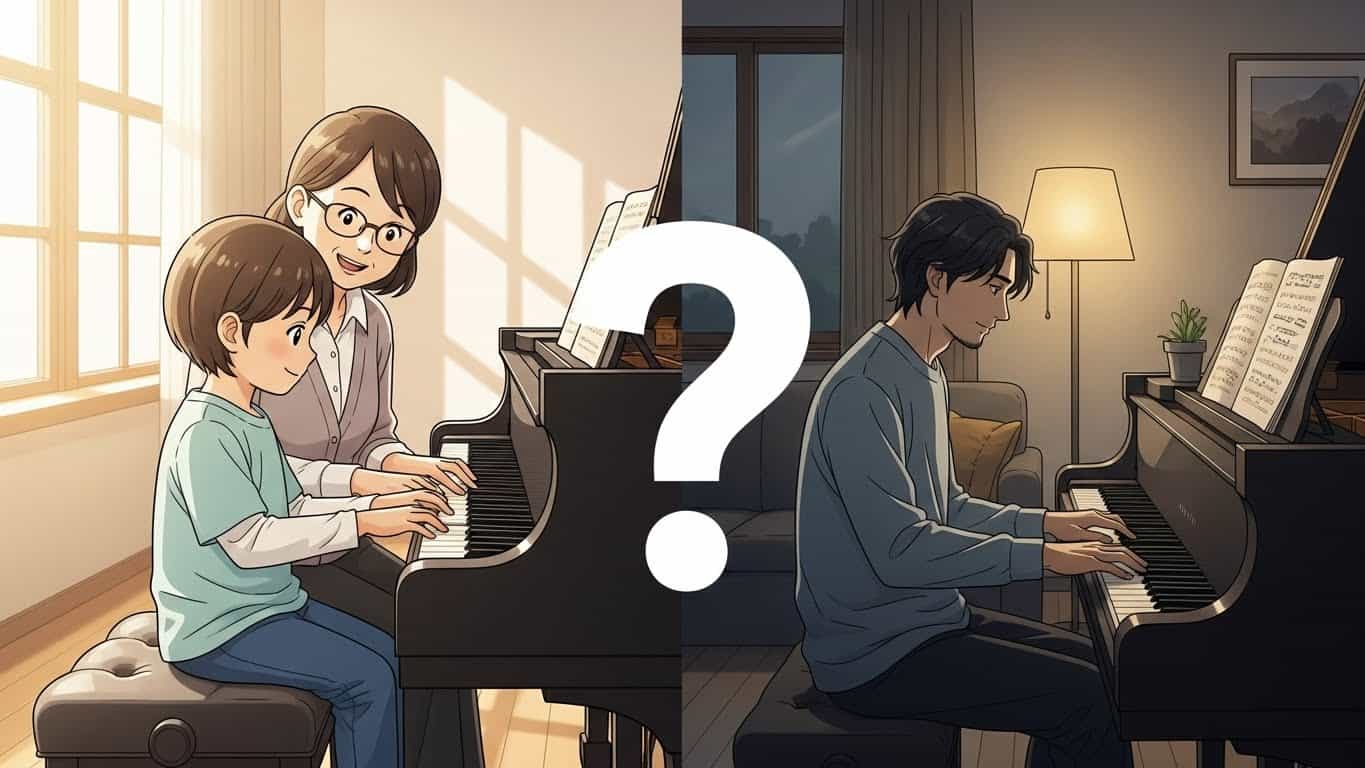
The myth that “kids learn faster” comes from a few observable truths:
- Kids seem more flexible and relaxed
- Children exposed early often reach high technical levels
- Many professional pianists started young
But here’s the flaw:
We confuse “early exposure” with “faster learning.”
Starting earlier ≠ learning faster.
A child who practices piano for 10 years may reach a high level — but that doesn’t mean they progressed faster year-to-year than an adult learner.
How Adults and Kids Learn Piano Differently
To understand who learns faster, we must understand how learning actually works.
1. Cognitive Development: Adults Have the Edge Early On
Adults have fully developed:
- Logical reasoning
- Pattern recognition
- Abstract thinking
This allows adults to:
- Understand music theory faster
- Grasp chord progressions intuitively
- Recognize patterns across songs
A child might need months to understand something an adult can learn in one explanation.
Example:
An adult can quickly understand:
- Why certain chords work together
- How scales form patterns
- How rhythm subdivisions function
Children usually learn these concepts implicitly over time.
2. Adults Learn With Intention
Adults rarely sit at the piano “just because.”
They usually:
- Set goals
- Choose music they love
- Track progress
This goal-oriented mindset dramatically increases learning speed.
Kids, on the other hand:
- Often rely on external motivation (parents, teachers)
- Practice because they’re told to
- May not fully understand why they’re practicing
3. Practice Efficiency: Adults Win Here
Adults typically practice less time — but with more focus.
Instead of:
- Repeating pieces mindlessly
- Playing start-to-finish repeatedly
Adults often:
- Isolate difficult sections
- Use slow practice intentionally
- Apply concepts across songs
👉 30 focused minutes as an adult can outperform 60 minutes of unfocused child practice.
The Neuroscience Behind Adult Learning
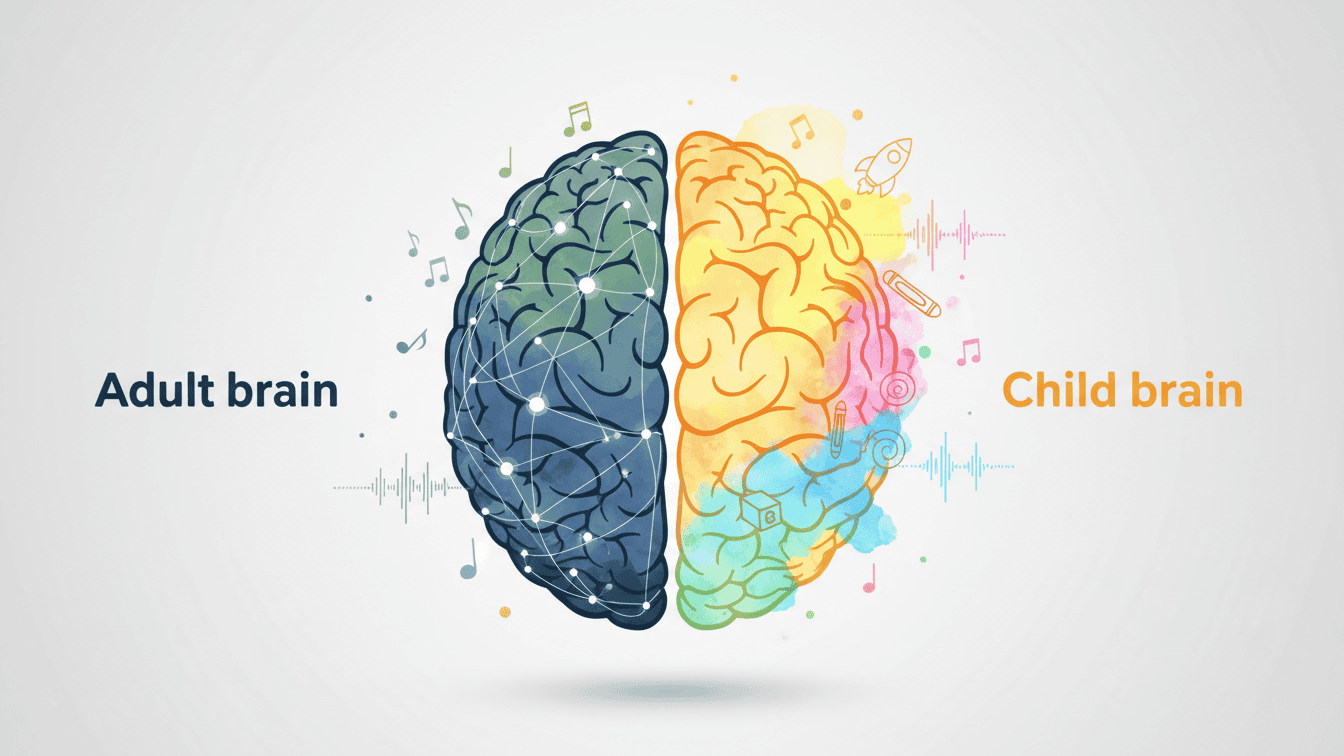
One common concern is neuroplasticity — the brain’s ability to adapt.
Yes, children have higher baseline plasticity.
But here’s the key insight:
Adults compensate with strategy and cognition.
Modern neuroscience shows:
- Adults can form new neural pathways well into later life
- Learning speed depends more on method than age
- Mental engagement increases plasticity regardless of age
In fact, learning piano as an adult improves memory, coordination, and cognitive health, especially when combined with intentional practice.
Where Kids Do Have an Advantage (Let’s Be Honest)
To be fair, children do have advantages — just not the ones people assume.
1. Long-Term Technical Refinement
Children who train consistently for years often develop:
- Extremely refined finger technique
- Automatic coordination
- Deep motor memory
This comes from thousands of hours over many years, not faster learning per session.
2. Fewer Mental Barriers
Kids don’t worry about:
- Making mistakes
- Looking foolish
- “Doing it wrong”
Adults often:
- Overthink
- Fear mistakes
- Compare themselves to others
These emotional barriers — not age — slow adult progress.
Why Many Adults Actually Progress Faster in the First 6–12 Months
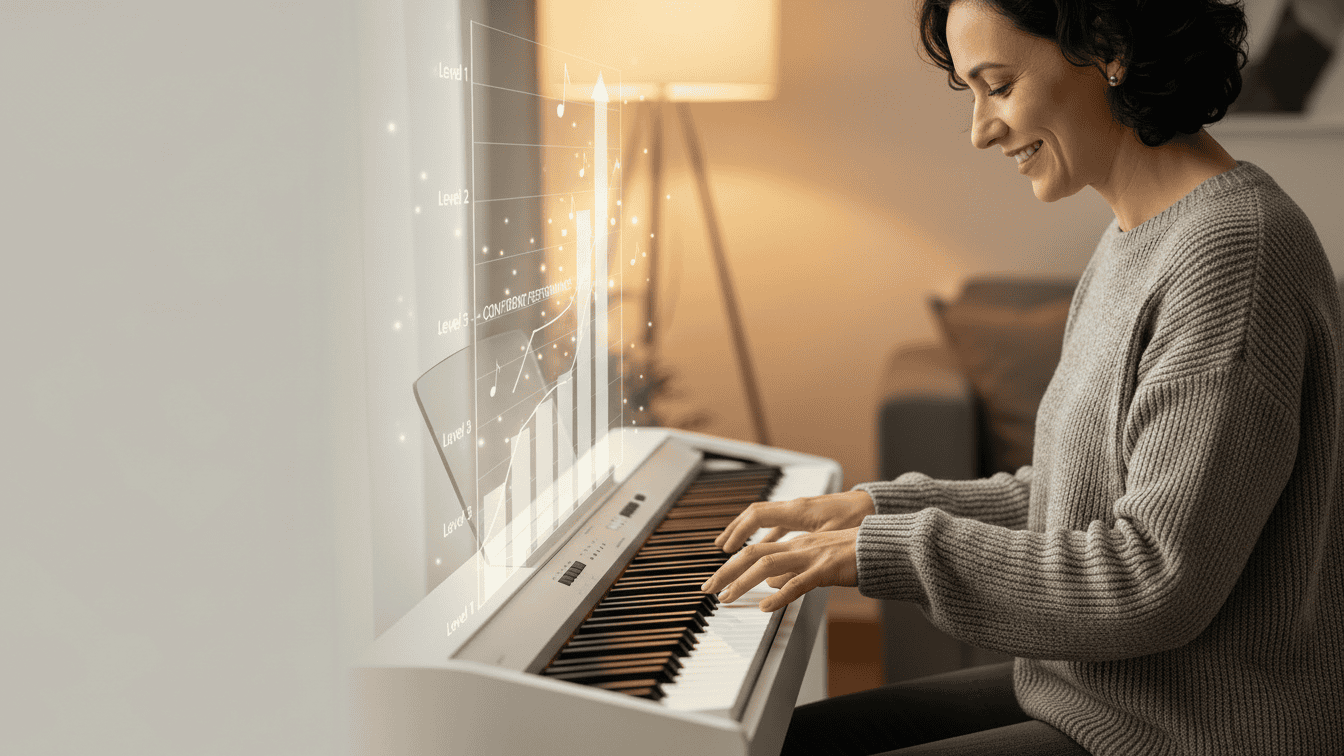
Here’s the truth most teachers will confirm:
👉 Adults often outperform children in the first year of piano learning.
Why?
1. Immediate Musical Application
Adults often start by learning:
- Chords
- Accompaniment patterns
- Real songs they love
Children usually begin with:
- Basic note reading
- Simple melodies
- Slow progression
As a result, adults often:
- Play recognizable music sooner
- Feel motivated faster
- Stay consistent
2. Adults Learn Patterns, Not Just Notes
Pattern-based learning dramatically accelerates progress.
Adults naturally understand:
- Chord shapes
- Scale patterns
- Progressions like I–V–vi–IV
This allows them to:
- Play many songs with fewer concepts
- Transfer skills quickly across music
👉 This is why many adult-focused courses emphasize pattern-based learning instead of pure sheet music.
(You can see this approach in detail in our in-depth PianoForAll Review — internal link placeholder)
Does Learning Style Matter More Than Age? (Yes — Massively)
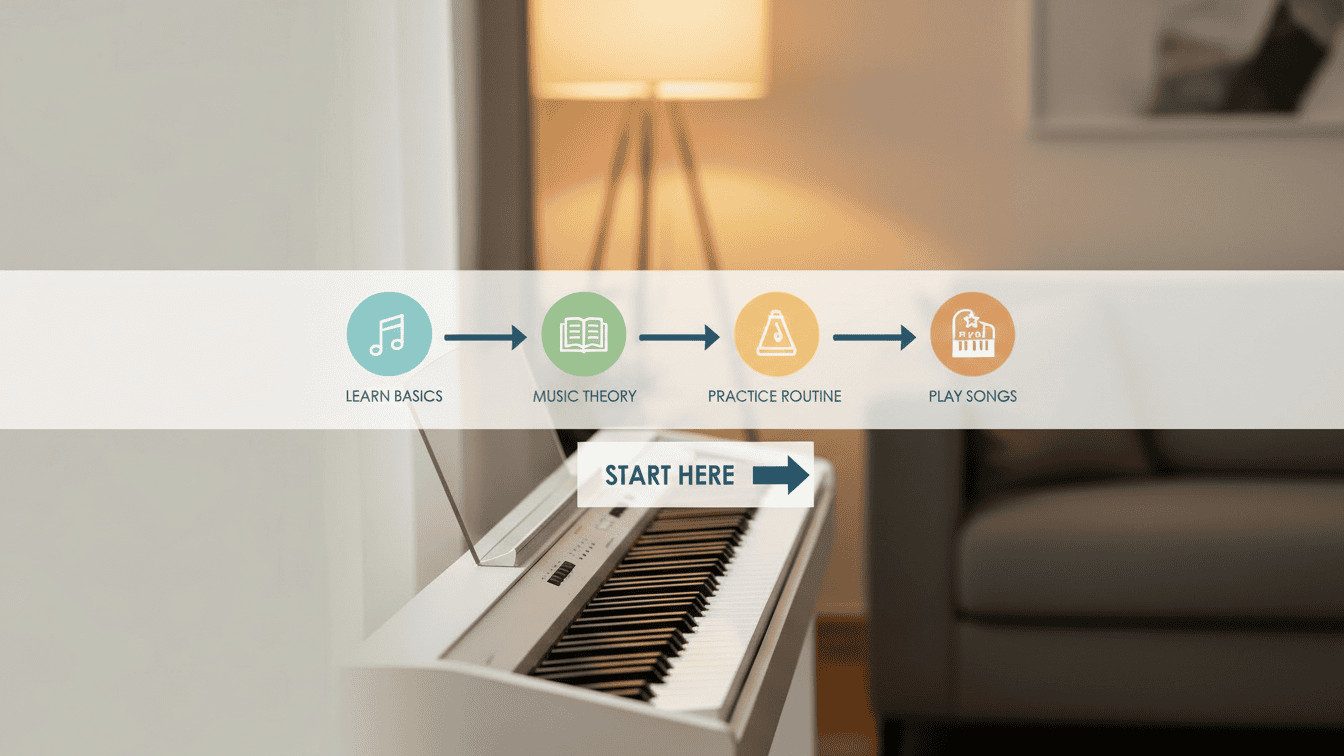
Age matters less than method.
Adults who struggle usually:
- Follow child-based methods
- Overemphasize sheet music early
- Lack structure
Adults who succeed often:
- Use adult-optimized courses
- Learn chords + rhythm first
- Apply music practically
👉 If you want a full roadmap, see our guide:
How to Learn Piano as an Adult: Step-by-Step Guide
Sheet Music vs. Chord-Based Learning for Adults
Traditional piano education emphasizes:
- Reading notation
- One-note-at-a-time melodies
But adults often learn faster with:
- Chord-based systems
- Rhythm patterns
- Playing by ear foundations
This doesn’t mean adults shouldn’t read music — only that timing matters.
Many adults progress faster when they:
- Learn chords and patterns first
- Build musical confidence
- Add sheet music later
👉 Related read: How to Learn Piano Without Sheet Music
Real-World Examples: Adult Learners vs Child Learners
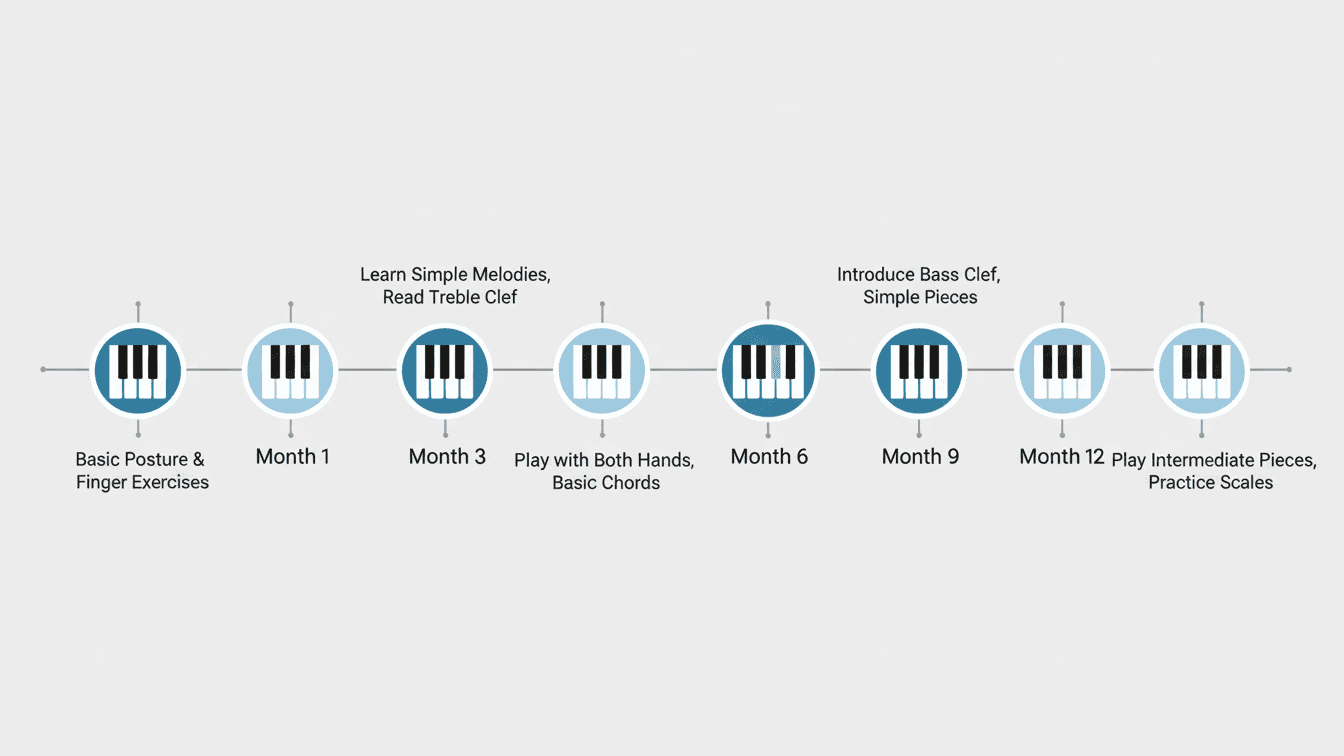
Example 1: Adult Beginner (Age 40)
- Practices 25 minutes/day
- Focuses on chord progressions
- Learns 5–7 songs in 3 months
- Understands theory basics
Example 2: Child Beginner (Age 8)
- Practices 20–30 minutes/day
- Focuses on notation
- Learns 2–3 simple pieces
- Limited theoretical understanding
Who progressed “faster”?
👉 The adult did — in functional musical ability.
Why Some Adults Feel “Slower” (And It’s Not Age)
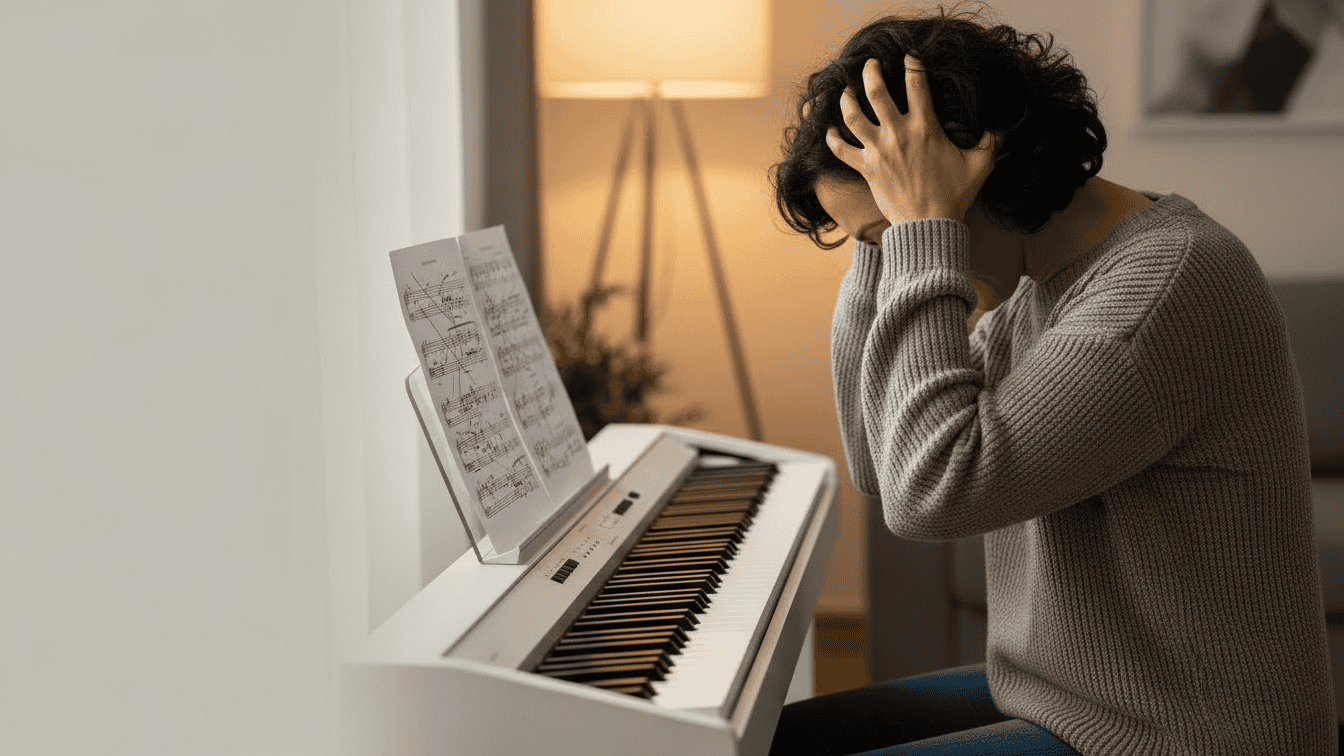
If adults sometimes feel slower, it’s usually because of:
- Unrealistic expectations
- Comparing themselves to professionals
- Poor learning structure
- Inconsistent practice
The solution isn’t starting younger — it’s learning smarter.
How Adults Can Maximize Learning Speed on Piano
If you’re an adult learner, here’s how to learn faster than most kids:
1. Use Adult-Focused Methods
Avoid child-centric curriculums.
2. Practice With Purpose
Short, focused sessions beat long unfocused ones.
3. Learn Music You Love
Motivation accelerates learning.
4. Focus on Patterns
Chords, scales, progressions.
5. Accept Mistakes
Mistakes are learning accelerators, not failures.
Is It Ever Too Late to Learn Piano?
No.
And not just philosophically — scientifically.
Adults in their:
- 30s
- 40s
- 50s
- Even 60s+
Regularly learn piano successfully when using the right approach.
👉 Read more here: Is It Too Late to Learn Piano as an Adult?
Final Verdict: Who Learns Piano Faster — Adults or Kids?
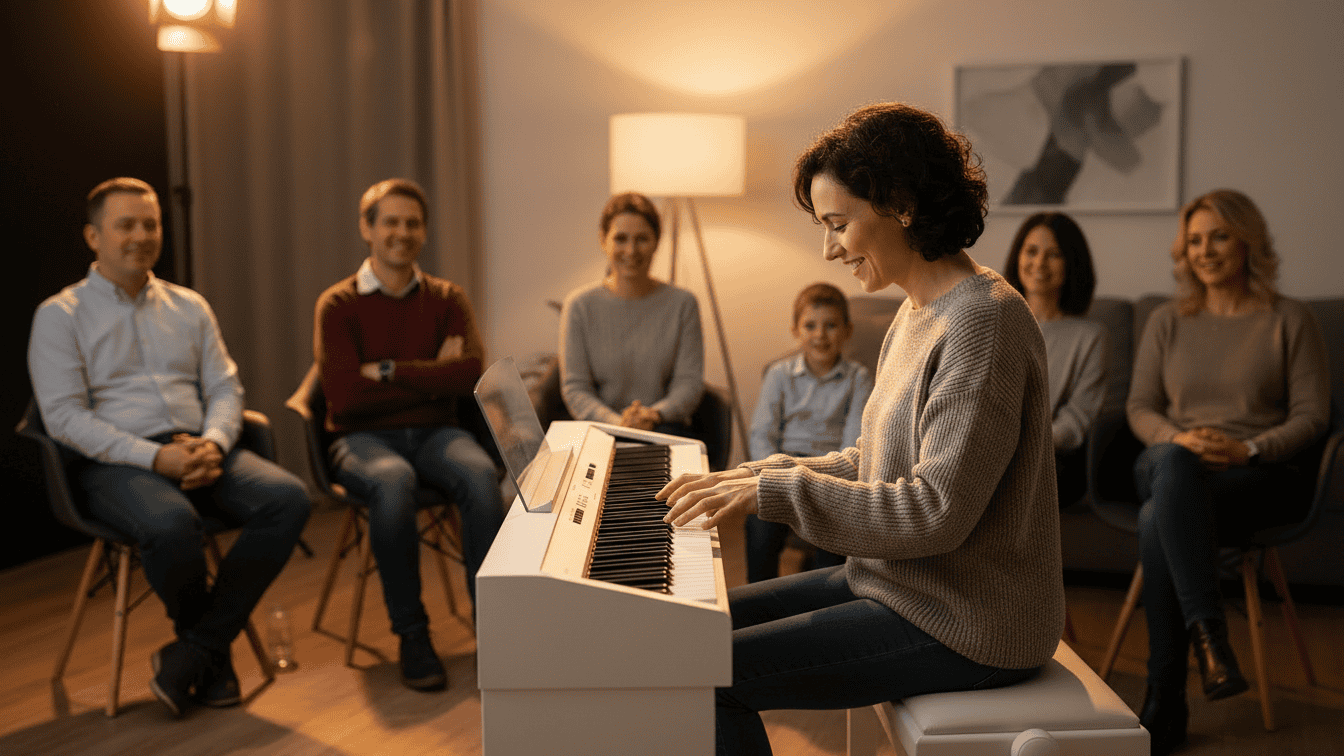
The Truth Revealed:
- Adults often learn piano faster at the beginning
- Kids may surpass adults long-term if they practice for many years
- Method > age
- Motivation > starting early
If your goal is:
- Playing songs you love
- Understanding music
- Enjoying piano as part of your life
👉 Being an adult is an advantage — not a disadvantage.
What’s Next?
If you’re ready to start or restart piano as an adult, here are your next steps:
- Read the Learn Piano for Adults – Complete Beginner Guide
- Explore the best adult-friendly piano courses
- Choose a learning system built for adults, not kids
Learning piano isn’t about age.
It’s about approach.
And now — you know the truth. 🎹
FAQ: Adult Piano Learning
Q1. Can adults really learn piano faster than children?
Yes. Adults often progress faster early on because they understand instructions better, have stronger discipline, and can practice with purpose.
Q2. Is it too late to learn piano at 30, 40, or 50?
No. Adults of any age can learn piano successfully. The brain remains capable of learning new motor and musical skills throughout life.
Q3. How long does it take an adult to play simple songs?
With consistent practice, most adults can play simple songs within 4–6 weeks.
Q4. Do adults need to read sheet music?
Not necessarily. Many modern methods teach adults to play without traditional sheet music first.
Q5. What is the best way for adults to learn piano?
Online step-by-step courses designed for adults are the most effective method.